

Youth Day South Africa: Why the Diaspora’s Money Is Shaping the Next Generation
Every year on June 16, South Africa pauses for Youth Day South Africa. Schools close, families gather, and the country remembers the young people who walked into gunfire in Soweto in 1976 — not as soldiers, but as students demanding the right to learn in their own language.
That courage is why we mark Youth Day South Africa every year. But this year, June 16 carries a question that is impossible to ignore: what does real support for South Africa’s youth look like in 2026— and where is it actually coming from?
The answer, for millions of young South Africans, starts with a phone call from abroad and a money transfer app.
Youth Unemployment in South Africa: The Honest Numbers
Let’s not soften this. The employment picture for young South Africans is genuinely difficult.
According to Statistics South Africa’s Q1 2026 Quarterly Labour Force Survey, the unemployment rate for young peopleaged 15–24 stands at 60.9%. For those aged 25–34, it is 40.6%. In total, 4.7 million young people between 15 and 34 are unemployed and actively looking for work.
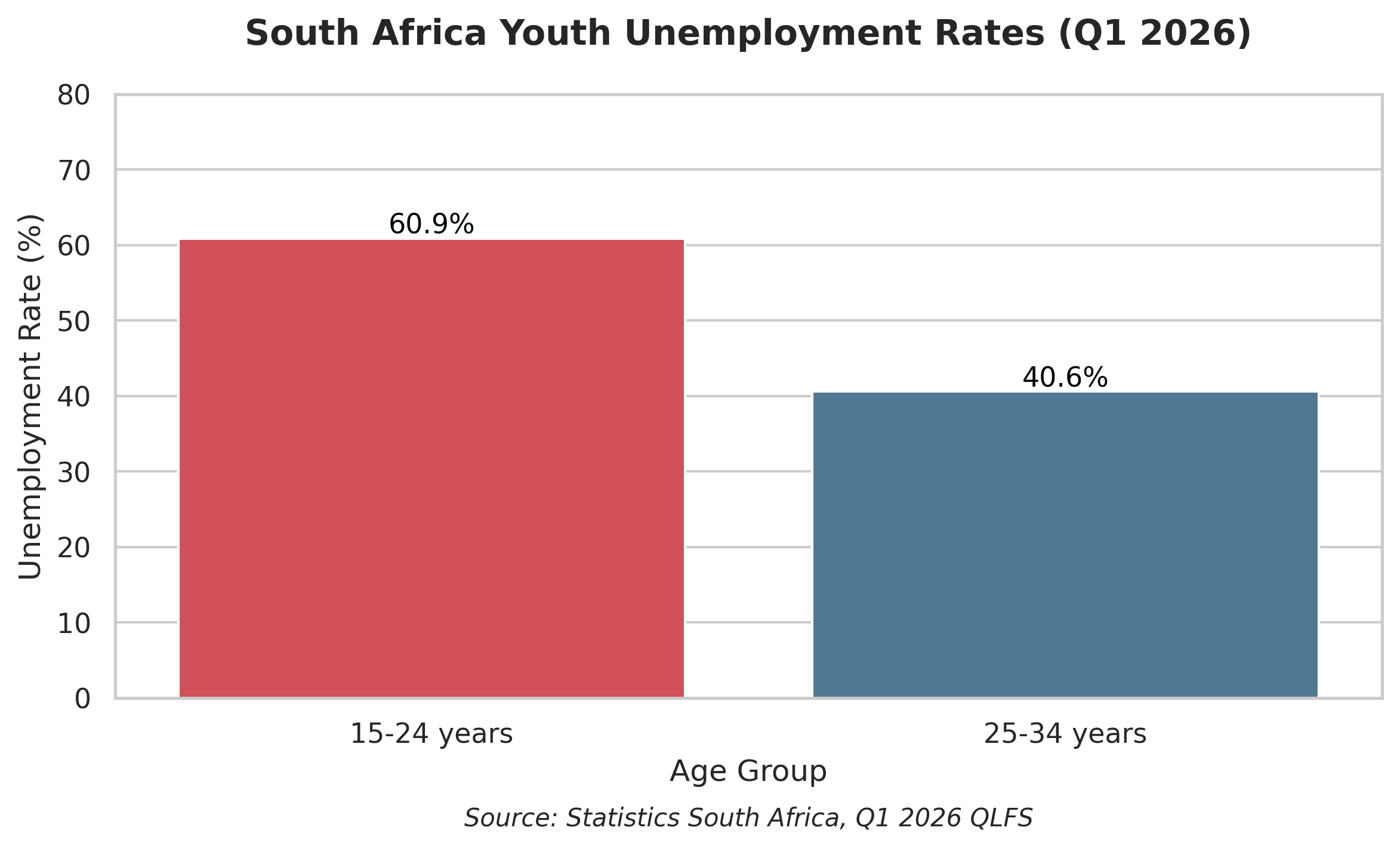
That’s not a statistic — that’s a generation waiting for a door to open.
What makes it worse is the NEET figure. “NEET” stands for Not in Employment, Education, or Training. In Q1 2026, roughly 37.6% of young people aged 15–24 were NEET. For the broader 15–34 age group, that number jumps to 45.6%. More than four in ten young South Africans aged 15 to 34 are disconnected from both the labour market and the education system at the same time.
Youth Empowerment Programs: What’s Actually Being Done
The South African government is not sitting still. Here is what is on the ground right now:
The National Youth Development Agency (NYDA)
The NYDA is the main government body driving youth economic inclusion. Through its National Youth Service Programme, it has already created over 65,000 community service opportunities. In late 2025, it launched a R2.5 billion youth empowerment fund to support small businesses owned by young people between 18 and 35, with grants ranging from R750,000 to R2 million per business.
SANSI — Skills to Industry Pipeline
In 2024, the Department of Women, Youth and Persons with Disabilities and the South African National Defence Force jointly launched the South African National Service Institute (SANSI). The goal is a direct pipeline from skills training to employment in key industries.
Why These Programs Still Need Backup
Government programs are real and necessary. But they reach a fraction of those who need help. The NYDA’s five-year plan targets 250,000 young people through national service. That’s meaningful — but South Africa has millions of young people outside the labour market right now. The gap between policy and lived reality is wide, and it is often filled by families, communities, and the South African diaspora.
The Quiet Backbone: Diaspora Remittances and South African Families
Here is something that rarely makes the news on June 16: the money that South African families living abroad send home quietly keeps households afloat, pays school fees, funds small business stock, and covers the gap when government programs fall short.
According to the World Bank, Africa received over $104 billion in remittances in 2024 — roughly twice the volume of overseas development assistance flowing into the continent. These are not charity transfers. They are strategic, committed, family-driven financial decisions.
The South African diaspora — estimated at close to 915,000 people living across the UK, Australia, New Zealand, the US, and Europe — sends money home regularly. That money goes toward food, rent, education, and in many cases, the startup capital for a young person’s first small business.
Think about what that actually means on the ground:
- A young man in Soweto gets R5,000 from his sister in London to buy stock for a tuck shop.
- A 22-year-old in the Eastern Cape pays her TVET fees because her uncle in Australia sends money every month.
- A family in Limpopo keeps the lights on while a son finishes his apprenticeship.
This is what financial support for families looks like in practice. It is not on a policy document. It is not captured in the NYDA’s annual report. But it is real, and it matters.
Supporting Small Business in SA: The Remittance-to-Enterprise Pathway
One of the most under-discussed stories in South Africa’s economic conversation is how diaspora transfers are quietly funding the informal and small business sector.
Research by the Institute of Security Studies shows that while roughly 75% of remittances go toward immediate household needs like food, housing, health, and education, the remaining 25% is often saved or invested. For many young South Africans, that investment is the seed capital for a small business — a spaza shop, a hair salon, a food stall, a tutoring service.This bottom-up funding serves as a quiet but powerful driver for broader Africa and Economic Growth across the region.
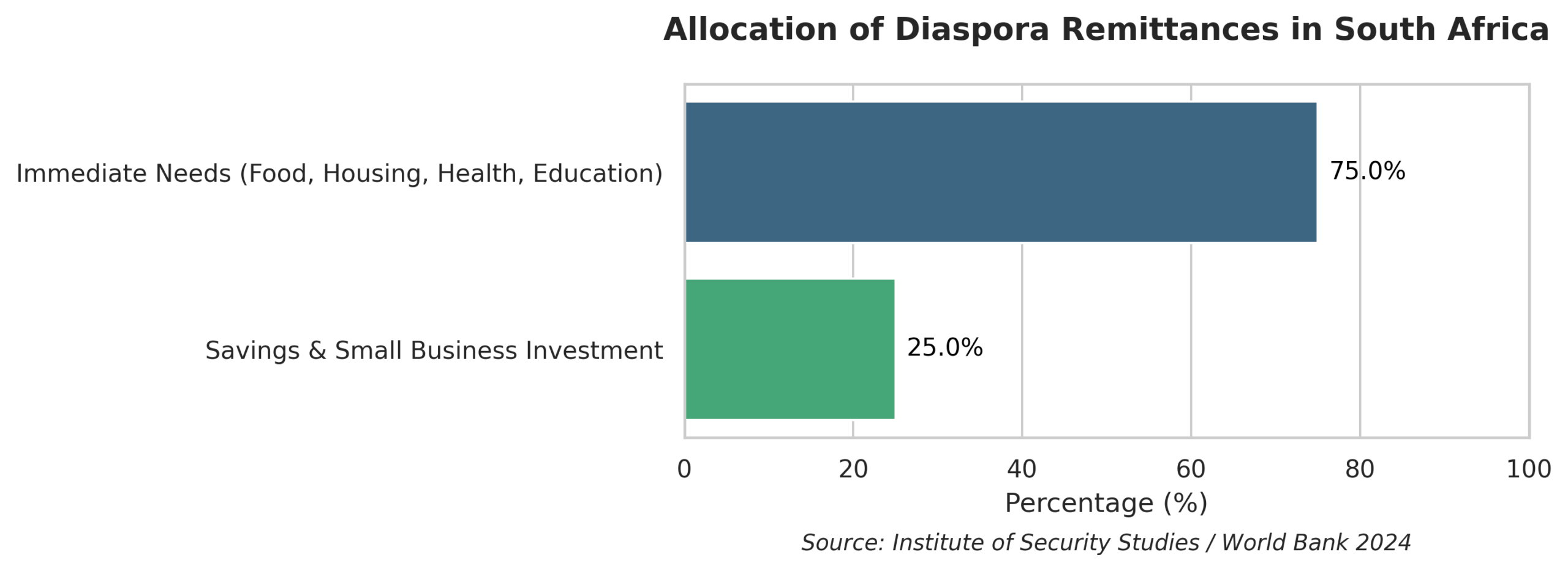
Supporting small business in SA through remittances is not a formal programme. It doesn’t have a government acronym. But it is happening every day, in townships and rural areas that formal enterprise development rarely reaches at scale.
The connection between the diaspora and the youth economy is not just emotional. It is financial infrastructure.
What June 16 Means When You’re Far From Home
For South Africans living abroad, June 16 Youth Day is a different kind of moment. It is a day to remember where you come from, and to think about the young people still navigating a difficult economy back home.
You might not be able to vote in the next local election. You can’t attend the commemoration ceremony in Potchefstroom or Soweto. But you can make a transfer that arrives in time for a school fee deadline, a business license payment, or a month’s worth of groceries that gives a young person the stability to keep trying.
That is not a small thing. In a country where 60.9% of young people aged 15–24 cannot find work, financial stability at the household level is what allows young people to stay in the game — to finish a qualification, to start a small business, to not give up.
The youth of 1976 gave everything they had. The diaspora’s contribution is different in scale and kind — but it is steady, consistent, and it shows up every month.