Skip to content
The Myth of the “Universal” Exchange Rate
When you check Google for “Pound to Naira” or “Dollar to Rupee,” you likely assume there is one universal exchange rate. In reality, that rate is just a benchmark. On the ground, multiple rates operate in parallel—some official, some market-driven, and some underground.
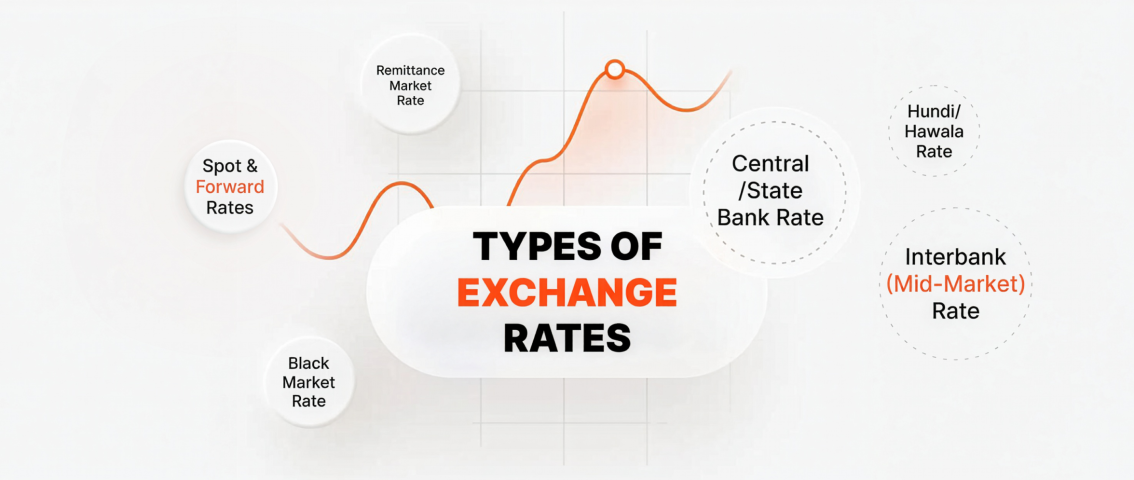
Understanding these differences is the key to ensuring your family receives the maximum amount possible. Let’s break down the main types of exchange rates you’ll encounter:
1. The Interbank (Mid-Market) Rate
This is the “real” value of a currency—the midpoint between what banks are buying and selling. It’s the rate you see on Google or XE. However, unless you are a major financial institution, you’ll rarely get this rate. Most providers add a “markup” or “spread” on top of this.
2. Central and State Bank Rates
This is the official rate published by a government. While it looks stable on paper, in countries facing currency shortages or strict controls, this rate is often disconnected from the actual cost of goods and services.
3. The Remittance Market Rate
This is the most important rate for most people. Money transfer companies and FinTech’s peg their rates slightly away from the mid-market to create a margin.
Watch out: Some companies advertise “Zero Fees” but hide their profit by offering a significantly lower exchange rate.
4. Parallel and “Black Market” Rates
In economies under heavy pressure, an unofficial rate often emerges. While it may seem to offer more value in the short term, using unregulated channels fuels inflation and lacks the legal protection of formal services.
5. Hundi and Hawala Systems
These are ancient, trust-based systems that bypass traditional banking. While they require no paperwork, they are completely unregulated. In modern finance, relying on these systems is risky for both the sender and the recipient’s local economy.
6. Spot vs. Forward Rates
-
Spot Rate: The price to exchange currency right now.
-
Forward Rate: An agreement to exchange at a specific rate on a future date, often used by businesses to hedge against volatility.
Why Your Choice of Exchange Rate Matters
Multiple exchange rates aren’t just a technical detail; they shape lives. They can squeeze the hard-earned savings of migrant workers and destabilize local economies.
This is where your choice of provider becomes a financial strategy. At Remit Choice, we believe in a fairer model. By keeping our rates as close to the mid-market as possible and maintaining a no-fee structure on many corridors, we protect our users from the hidden costs of exchange rate manipulation.
We stay within strict regulatory frameworks to ensure your money isn’t just “moving”—it’s moving safely, legally, and at its highest possible value.