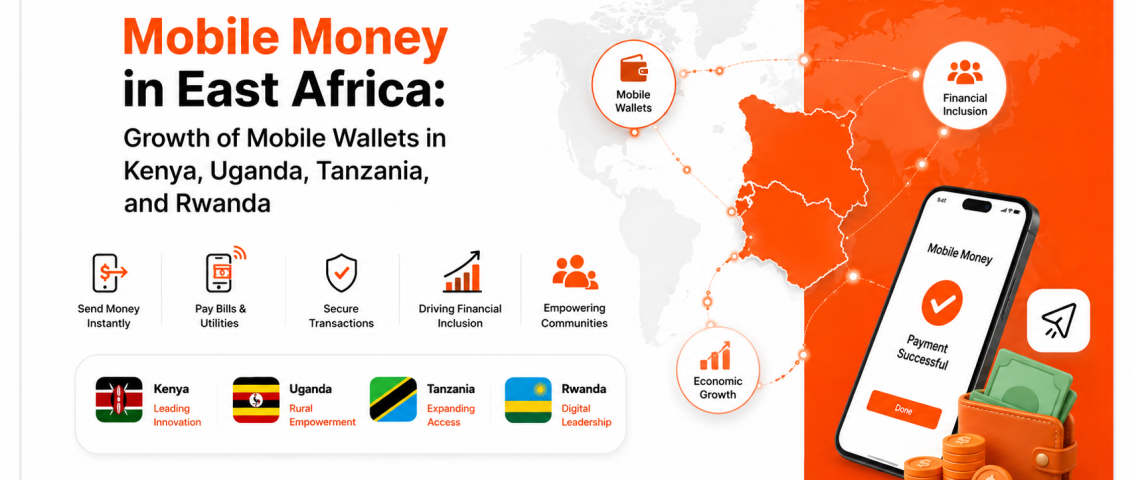
Mobile Money has become one of the most powerful financial innovations in Africa, especially in East African countries like Kenya, Uganda, Tanzania, and Rwanda.
In regions where traditional banking infrastructure is limited, mobile wallets have revolutionized how people send, receive, and store money—using just a mobile phone.
Today, Mobile Money is not just a payment method; it is a financial ecosystem powering commerce, remittances, and daily transactions.
What is Mobile Money?
Mobile Money is a digital financial service that allows users to:
- Send and receive money via mobile phones
- Pay bills and utilities
- Buy airtime and data
- Access savings and micro-loans
- Conduct merchant payments
It works without needing a traditional bank account, making it highly accessible for unbanked populations.
Why Mobile Money is Growing So Fast in East Africa
The rapid adoption of Mobile Money in East Africa is driven by several key factors:
1. High Unbanked Population
A large portion of the population in rural and semi-urban areas lacks access to banks.
2. Mobile Phone Penetration
Affordable smartphones and feature phones have enabled widespread adoption.
3. Agent Network Expansion
Millions of local agents allow cash-in and cash-out services across villages and cities.
4. Low Transaction Costs
Mobile wallets are cheaper compared to traditional banking or money transfer services.
5. Government Support
Regulatory frameworks in countries like Kenya and Rwanda have supported fintech innovation.
Mobile Money in Kenya: A Global Success Story
Kenya is widely considered the birthplace of modern Mobile Money innovation with services like M-Pesa leading the revolution.
Key Highlights:
- One of the highest Mobile Money penetration rates globally
- Widely used for everyday payments, savings, and business transactions
- Strong integration with banking and fintech systems
Impact:
Mobile Money in Kenya has significantly improved financial inclusion and boosted small business growth.
Mobile Money in Uganda: Rapid Adoption in Rural Areas
Uganda has seen strong growth in Mobile Money usage, especially outside urban centers.
Key Highlights:
- High usage among small traders and rural communities
- Strong telecom-led ecosystem
- Increasing use for school fees and utility payments
Impact:
Mobile Money has become a primary financial tool for millions of Ugandans who previously had no formal banking access.
Mobile Wallet in Tanzania: Expanding Financial Access
In Tanzania, mobile wallet adoption is driven by competition between telecom operators and fintech innovation.
Key Highlights:
- Multiple mobile wallet providers competing in the market
- Strong growth in merchant payments and e-commerce
- Increasing cross-border transaction usage
Impact:
Mobile wallets are bridging financial gaps between urban and rural populations, enabling faster and more inclusive financial participation.
Mobile Wallet in Rwanda: A Digital Finance Leader
Rwanda has positioned itself as a digital-first economy, with strong government backing for cashless systems.
Key Highlights:
- High digital payment adoption rate
- Strong integration with national ID and banking systems
- Focus on building a cashless economy
Impact:
Mobile wallets are accelerating Rwanda’s transition into a fully digital financial ecosystem.
Key Benefits of Mobile Wallet in East Africa
1. Financial Inclusion
Millions of unbanked individuals now have access to financial services.
2. Economic Growth
Small businesses can transact more efficiently.
3. Safety & Security
Reduces risks associated with carrying cash.
4. Convenience
Instant transactions anytime, anywhere.
5. Cross-Border Payments
Increasing support for regional money transfers.
Challenges Facing Mobile Wallet Adoption
Despite strong growth, mobile wallet systems still face challenges:
- Regulatory differences across countries
- Fraud and security risks
- Limited interoperability between providers
- Cash dependency in rural economies
- Network and connectivity issues
Future of Mobile Wallet in East Africa
The future of mobile wallet systems in East Africa is highly promising:
1. Interoperability
Seamless transfers between different mobile wallets.
2. Integration with Banking Systems
Stronger collaboration between banks and telecom operators.
3. Expansion into Credit & Savings
More micro-loans, insurance, and investment tools.
4. Cross-Border Payments Growth
Stronger regional financial connectivity across East Africa.
5. AI & Fintech Innovation
Smarter fraud detection and personalized financial services.
Internal & External Insights
For deeper understanding of digital payments and remittances, you can explore:
- World Bank reports on financial inclusion
- GSMA mobile wallet insights
- Regional fintech comparison platforms like Monito and RemitFinder
Frequently Asked Questions (FAQs)
What is a mobile wallet?
A mobile wallet is a digital financial service that allows users to send, receive, and store money using a mobile phone without a traditional bank account.
Which country uses mobile wallets the most in East Africa?
Kenya is the most advanced mobile wallet market in East Africa.
Is a mobile wallet safe?
Yes, most mobile wallet platforms use encryption, PINs, and regulated telecom systems, making them relatively safe.
Can mobile wallets be used internationally?
Yes, many mobile wallet services now support cross-border transfers within Africa and globally through partnerships.
Conclusion
Mobile wallet systems have transformed East Africa into one of the most advanced digital payment ecosystems in the world. Countries like Kenya, Uganda, Tanzania, and Rwanda are leading the way in financial inclusion and digital innovation.
As technology continues to evolve, mobile wallet adoption will play an even bigger role in shaping the future of payments, banking, and economic growth across the continent.