
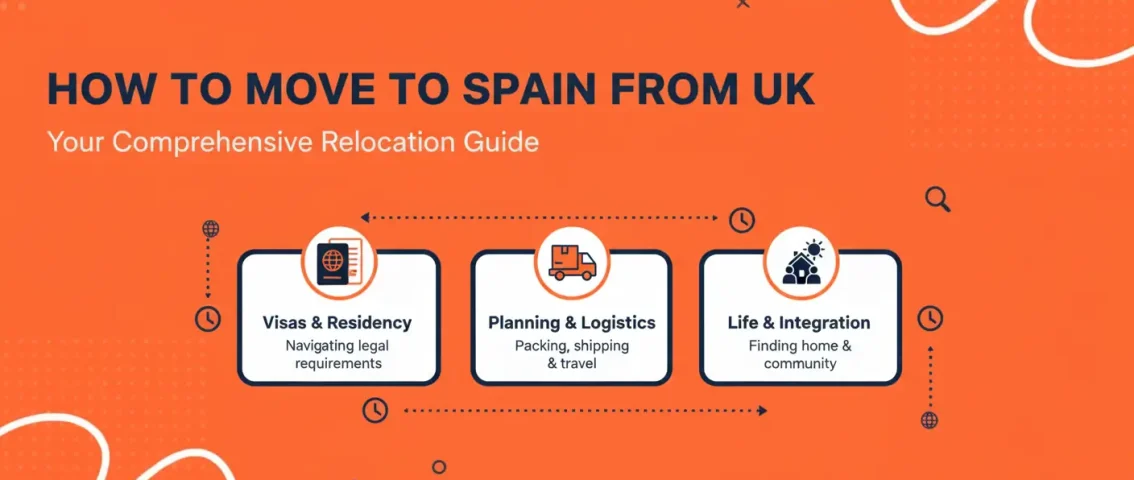
Spain is a popular place for people from the UK to visit because of its sunny beaches, tasty tapas, and laid-back way of life. But since the UK officially left the EU, moving to Spain has become more complicated. You need special visas and to plan your finances very carefully. This detailed guide explains how to migrate to Spain from the UK after Brexit, making sure you take care of all the legal, logistical, and financial details to make the relocation go well.
Getting to Know the Post-Brexit Visa Situation
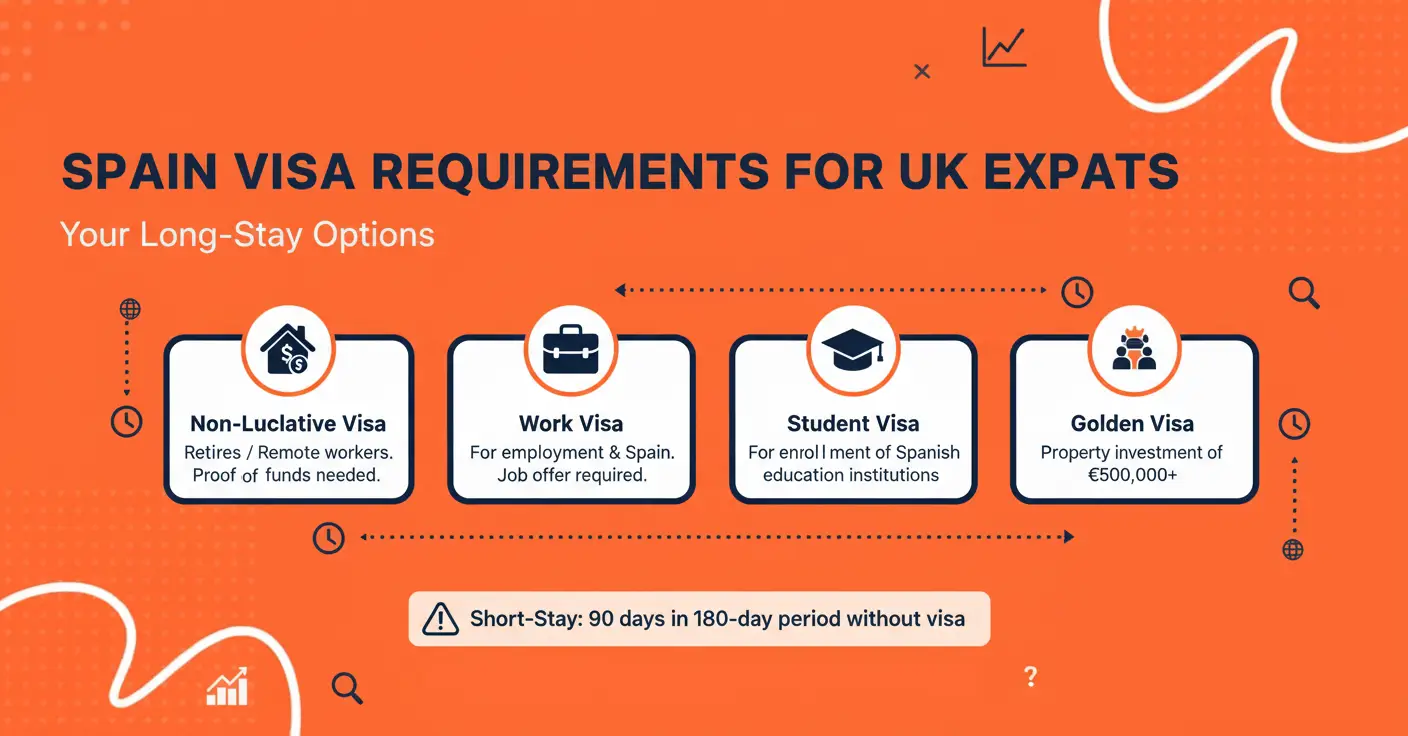
Before Brexit, people from the UK could migrate freely around the EU. If you want to stay in Spain for more than 90 days in any 180-day period, you need to get a residence visa from the Spanish Consulate in the UK before you go. UK Government – Brexit: Living in Spain offers guidance on the changes.
Picking the Right Residence Visa
The most common ways for people to move to Spain are:
- Non-Lucrative Visa (NLV): This is the best way for people who are retired or have passive income to move. You need to show that you have enough money to live on without working in Spain. The minimal amount needed is based on the Spanish Public Indicator of Multiple Effect Income (IPREM), which is about €2,400 per month for the main applicant or €28,800 per year. This must be held in a bank account. Spanish Government – Non-Lucrative Visa
- Golden Visa (Investor Visa): This is for people who are investing a lot of money in Spain, usually by buying real estate for $500,000 or more. This is a quick way to get residency. Golden Visa Spain
- Digital Nomad Visa (DNV): This is great for remote workers who make most of their money outside of Spain and started in 2023. It requires confirmation of self-employment or a contract with a non-Spanish company, and a minimum monthly income (typically 200% of the Spanish minimum salary, which is €1,260 or €2,520 monthly). Spain’s Digital Nomad Visa
You need a valid passport, a clean criminal record certificate (legalised and apostilled), proof of private health insurance that is valid in Spain, and the right application documents for all visa applications.
[remit_app_cta]
Steps for getting settled:
Once your visa is approved and you get to Spain, the next procedures are to make your residency and integration official.
How to Get a TIE (Foreigner’s Identity Card)
You must go to the local police station (Comisaría de Policía) and apply for the TIE (Tarjeta de Identidad de Extranjero) within 30 days of arriving in Spain. This card formally makes you a resident, and you need it for nearly everything, like banking and utilities. TIE Application Process
Getting Your NIE and Empadronamiento
- NIE (Número de Identidad de Extranjero): This is your unique foreign identification number, which is like a national insurance number. You should apply for this first, as it’s required for the TIE, buying property, and signing contracts. How to Get an NIE
- Empadronamiento: This is the procedure of registering your Spanish address at your local Town Hall (Ayuntamiento). It shows that you live in the municipality and is necessary to get services like healthcare and vote in local elections. Empadronamiento Registration
How to Handle Your Money in Two Currencies
Moving means handling big transfers and everyday transactions between the UK and Spain. You can’t move without the correct financial instruments.
Doing the Big Transfers
You need a dependable and affordable solution for your first big transfers, such as buying a house or meeting the NLV financial criteria. This is where companies like Remit Choice come in handy.
[remit_app_cta]
Setting up a local bank
While you may typically open a Spanish non-resident account from the UK, having a resident bank account is vital once you obtain your TIE. This makes it easier to pay bills and keep track of local income and expenses. Banking in Spain for Expats
Health and Education
- Healthcare: If you live in the UK and have a UK state pension, you may be able to get Spanish state healthcare through the S1 form. If not, or while waiting for eligibility, you must maintain private health insurance as required by your visa. Healthcare in Spain for Expats
- Education: Spanish state schooling is free for all residents, regardless of nationality. To sign up your kids, you will need your Empadronamiento and TIE. Education in Spain
Moving from the UK to Spain is a long process with a lot of steps, but if you plan ahead, you can get through the new post-Brexit rules and start enjoying life on the Iberian Peninsula. First, get your visa. Then, make sure your funds are in order. Finally, focus on getting used to the lively Spanish way of life.
Questions that are often asked
Q1: How long does it take to get a Spanish visa?
The process, especially for the Non-Lucrative Visa, might take between 2 and 4 months from the moment you send in your full application to the Spanish Consulate in the UK. At least six months before you plan to move, start getting your papers together. Visa Processing Times
Q2: Is it possible to work in Spain with a Non-Lucrative Visa (NLV)?
No, the NLV is only for residents who don’t work. In Spain, you can’t work or do anything professional. You need to apply for a special Work Visa or the Digital Nomad Visa if you want to work. Work Visas in Spain
Q3: Should I learn Spanish before I move?
A lot of popular expat areas have people who speak English, but it’s a good idea to learn Spanish for everyday living, getting to know the community, and doing official procedures like applying for your TIE or Empadronamiento. Learning Spanish for Expats
[remit_app_cta]