
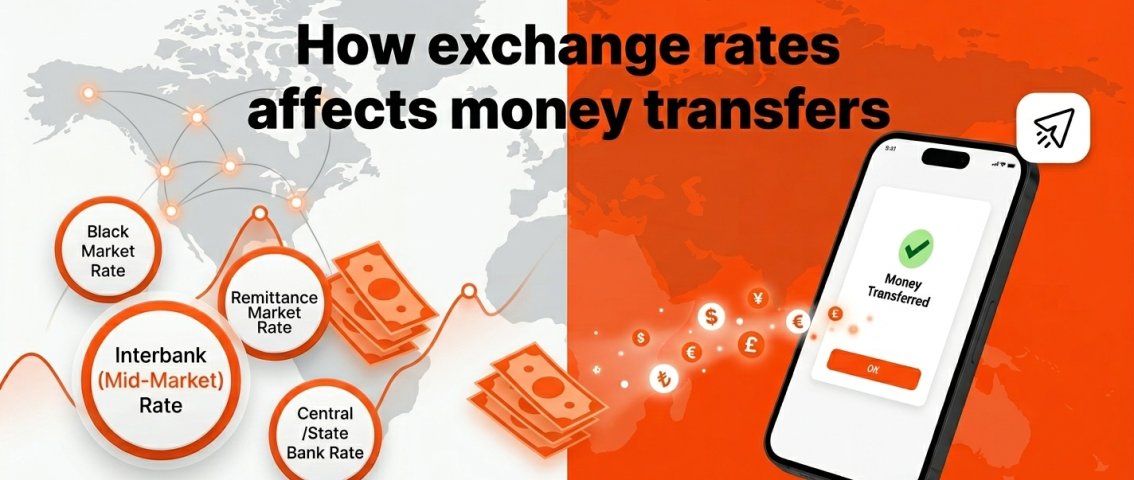
Sending money abroad should feel simple. But one factor can quietly change how much your recipient gets, the exchange rate. Understanding how exchange rates affect money transfers helps explain why the amount received does not always match what you sent.
In this guide, we’ll break down why exchange rates matter and how you can make smarter decisions when sending money internationally.
What are exchange rates and why do they matter?
An exchange rate is the value of one currency compared to another. For example, how many euros you get for one pound.
When you send money abroad, your funds are converted into another currency. Even a small change in the rate can affect the final amount received.
This is especially important in:
- Cross border payments
- Remit payment services
- Regular transfers to family or business partners
A better rate means your recipient gets more. A poor rate means they get less — even if you send the same amount.
To understand this better, you can explore different types of exchange rates explained in detail, which helps clarify how rates are determined and applied in real transactions.
What role foreign exchange plays in real-world fund transfers
Let’s keep it simple.
You send £1,000 abroad.
- At a strong rate → Recipient gets more in local currency
- At a weaker rate → Recipient gets less
Now imagine doing this every month. Over time, the difference adds up.
This is why understanding the impact of exchange rates on remittance is so important.
Mid-market rate vs offered rate
Most platforms do not give you the “real” exchange rate.
🔹 Mid-market rate
This is the true rate you see on financial sites like
the European Central Bank or
International Monetary Fund
🔹 Offered rate
This is the rate you actually get when sending money.
The difference between these two is often where providers make money.
That’s why many users now search for:
- real vs mid market exchange rate transfers
- hidden fees in exchange rate transfers
Why exchange rates change constantly
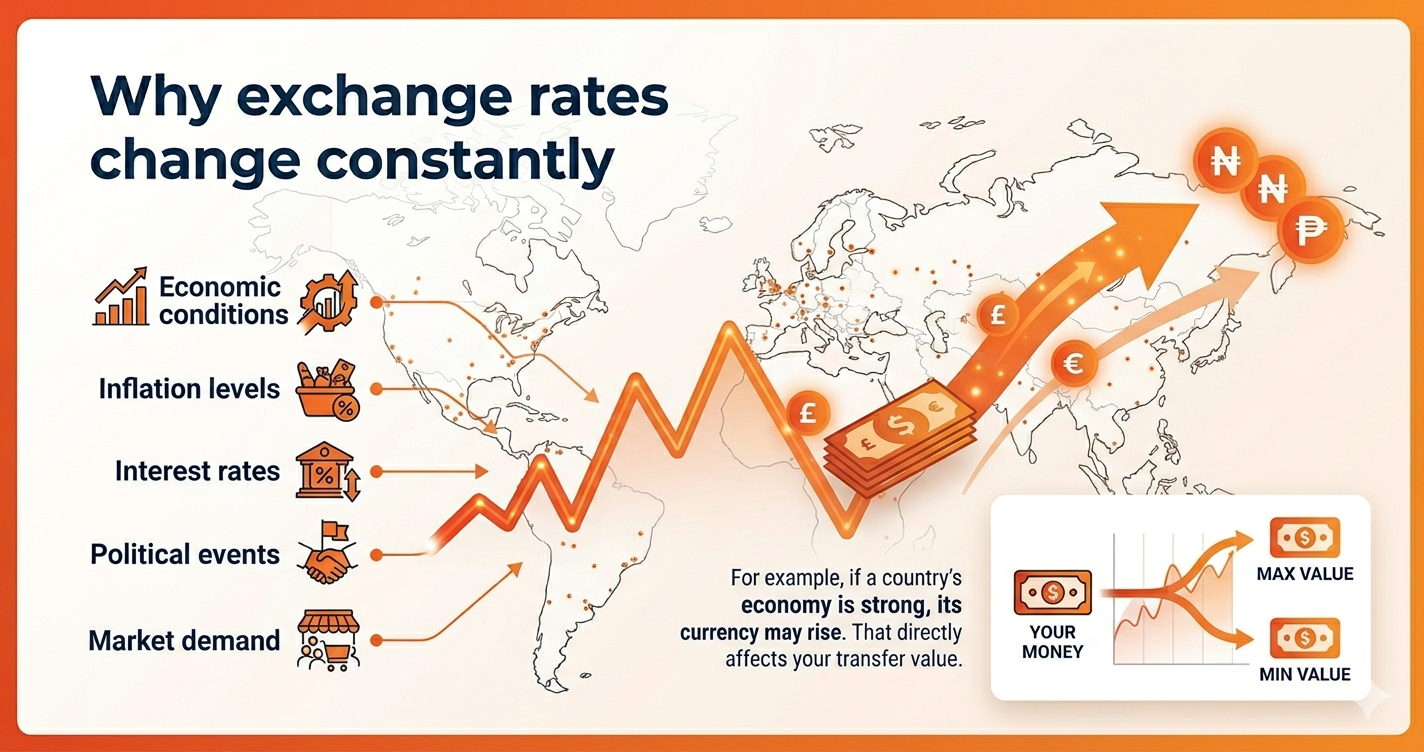
Exchange rates move all the time. Some common reasons include:
- Economic conditions
- Inflation levels
- Interest rates
- Political events
- Market demand
For example, if a country’s economy is strong, its currency may rise. That directly affects your transfer value.
Exchange rates vs transfer fees
Many people focus only on fees. But exchange rates can have a bigger impact.
Example:
- Low fee + bad rate = You lose more
- Slight fee + strong rate = You gain more
This is why comparing providers matters when you:
- send money with credit card
- make international bank transfers
- use a best digital wallet
How to get the best value when sending money
You can’t control exchange rates. But you can control how you respond to them.
✅ 1. Compare before you send
Always check multiple providers. Look beyond fees — check the rate offered.
✅ 2. Track exchange rate trends
If your transfer isn’t urgent, wait for a better rate.
✅ 3. Use transparent platforms
Choose services that clearly show:
- Exchange rate
- Fees
- Final amount received
✅ 4. Avoid hidden margins
Search for:
- currency conversion fees vs exchange rates
- best exchange rates for sending money
These help you spot hidden costs.
How long can bank transfers take and why it matters
Timing also plays a role.
If a transfer takes 2–3 days, the exchange rate may change during that time. That can affect the final amount.
This is why faster services often provide:
- Better control
- More predictable outcomes
What is remittance and why exchange rates matter more here
If you’re new to this space, you might ask: what is remittance?
Remittance simply means sending money to another country, often to family.
For regular remittances:
- Small rate differences = Big long-term impact
- Monthly transfers = Higher exposure to fluctuations
This makes exchange rates even more important.
Regulations and international transfers
Some users also worry about:
- US regulations limit on sending money abroad
- Taxes or compliance rules
While regulations affect how much you can send, exchange rates affect how much is received.
Both matter — but for everyday users, the exchange rate often has the bigger financial impact.
Key takeaway: small changes, big impact
The currency exchange rates money transfer impact is often underestimated.
Even a 1–2% difference can mean:
- More support for family
- Better business margins
- Less money lost over time
Understanding this gives you an edge every time you send money.
Final thoughts
Sending money abroad is more than just pressing a button. The exchange rate plays a silent but powerful role in every transaction, and understanding how exchange rates affect money transfers can make a real difference in the value your recipient receives.
Once you understand how foreign exchange movements influence the future of global remittances, you can make smarter choices and ensure more of your money reaches where it matters most.