
What Is a Carte Vitale and Why It Matters
If you’re a foreigner living in France, obtaining a Carte Vitale is one of the most important administrative steps you’ll take. The Carte Vitale is France’s official health insurance card, managed by Assurance Maladie (Ameli) — the country’s national healthcare system.
This green card grants you access to France’s excellent healthcare network, ensuring automatic reimbursement for most medical expenses, from doctor visits to pharmacy prescriptions.
Understanding the French Healthcare System (Assurance Maladie)
France’s Assurance Maladie covers a large portion of healthcare costs for residents. It’s a universal system based on the principle that everyone contributes and benefits. Foreign residents who live, study, or work in France can become part of this system, provided they register correctly and meet residency requirements.
Benefits of Having a Carte Vitale for Foreigners
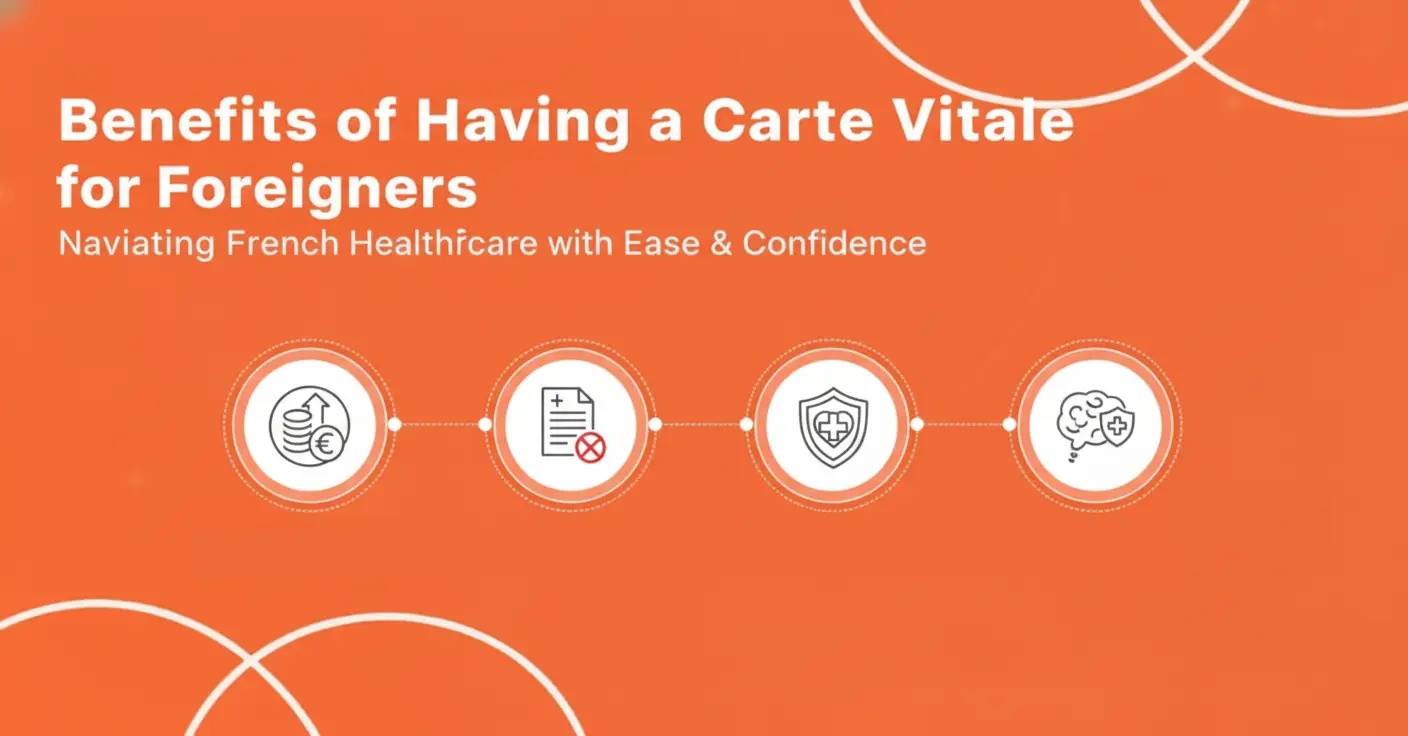
- Direct reimbursement: Doctors can process your visit digitally through the card.
- Less paperwork: Automatic claim processing via your Ameli account.
- Access to affordable care: Most services are subsidized by the state.
- Peace of mind: Proof of legal health coverage during your stay in France.
Who Can Apply for a Carte Vitale
EU Nationals Living in France
Citizens from EU/EEA countries or Switzerland can typically use their European Health Insurance Card (EHIC/CEAM) upon arrival, but for long-term stays, applying for a Carte Vitale ensures full integration into the French healthcare system.
Non-EU Residents and Expats
Non-EU nationals can apply once they’ve lived in France for more than three months and hold a valid residence permit. They’ll need to register with CPAM (Caisse Primaire d’Assurance Maladie) to receive a social security number.
International Students and Au Pairs
Students must register with etudiant-etranger.ameli.fr to access coverage. Au pairs can apply through their host family’s insurance arrangements.
Step-by-Step: How to Apply for a Carte Vitale as a Foreigner
Step 1: Gather Required Documents
You’ll need:
- A valid passport or residence permit
- Proof of address (utility bill or rental agreement)
- A birth certificate (translated into French)
- Bank details (RIB)
- Proof of employment, enrollment, or residence longer than 3 months
Step 2: Register with CPAM or Ameli
Go to your local CPAM office or register online via Ameli.fr. Submit your documents and application form.
Step 3: Receive Your Temporary Social Security Number
This temporary number allows you to start using healthcare services while waiting for your official Carte Vitale.
Step 4: Submit Your Application for the Carte Vitale
Once your permanent number is issued, you can apply for the card itself. You’ll be asked to submit a passport photo and confirm your details.
Step 5: Wait for Approval and Receive Your Card
The card is typically mailed within 3–8 weeks. You can then link it to your Ameli account for easy reimbursements.
Documents Required for a Carte Vitale Application
Identity and Residence Proof
Passport, visa, and valid proof of address in France.
Employment or Study Proof
A work contract, payslips, or student enrollment certificate.
Banking Information (RIB)
A RIB (Relevé d’Identité Bancaire) is required for reimbursements — it ensures that funds are deposited directly into your account.
How Long Does It Take to Receive a Carte Vitale
Processing times vary by region, but on average, you can expect it to take 6–8 weeks after submitting your full application. During this time, your temporary number lets you access services.
Common Problems and How to Avoid Them
Missing Documents
Many delays come from incomplete applications. Double-check your checklist before submitting.
Language Barriers and Ameli Account Issues
The Ameli website is mostly in French — use browser translation tools or visit your local CPAM with an interpreter.
Lost or Damaged Carte Vitale
You can easily request a replacement via your Ameli account.
Carte Vitale for Different Foreign Categories
Refugees and Asylum Seekers
Those granted asylum can apply immediately for a Carte Vitale under Protection Universelle Maladie (PUMA).
Workers with Temporary Contracts
Temporary or seasonal workers are eligible once they’ve worked and contributed to the French system.
Retirees Moving to France
Retirees from EU countries can use an S1 form; non-EU retirees need private insurance until registered with Assurance Maladie.
Carte Vitale vs CEAM: What’s the Difference?
- CEAM (EHIC): Temporary health coverage for visitors or short-term stays.
- Carte Vitale: Permanent card for residents that allows automatic reimbursements and simplified access to care.
Tips for a Smooth Application Process
- Apply early (as soon as you meet the 3-month rule)
- Translate all non-French documents
- Keep copies of every submission
- Set up an Ameli account immediately
- Visit Service-public.fr for updated forms and procedures
How Remit Choice Helps Foreigners in France
Sending Money Abroad While Living in France
While you wait for your Carte Vitale or settle into your new life, you might need to send money home to family. That’s where Remit Choice comes in.
Remit Choice: Secure, Fast, and Available in 70+ Countries
Remit Choice allows users in France to send money to over 70 countries, offering competitive exchange rates, no hidden fees, and fast delivery. It’s the perfect financial companion for expats and students navigating life abroad.
FAQs About Carte Vitale for Foreigners
- Can I apply for a Carte Vitale before living in France for 3 months?
Usually not. You must show proof of residence for at least three months. - Can I get a Carte Vitale without a French bank account?
A RIB is required for reimbursements. You can open a basic account (compte bancaire de base) to fulfill this need. - What if I lose my Carte Vitale?
Log in to your Ameli account and report it lost. A replacement will be mailed to you. - Is health insurance mandatory in France?
Yes. Every resident must have health coverage, either public or private. - How long does it take to receive my Carte Vitale?
Typically between 6 to 8 weeks, depending on your region and CPAM workload. - Can Remit Choice help me manage finances abroad?
Yes! Remit Choice enables you to transfer money securely to over 70+ countries, perfect for expats balancing life and family abroad.
Conclusion
Living in France as a foreigner becomes much easier once you have your Carte Vitale. It’s your ticket to healthcare peace of mind — and a sign that you’re officially part of French life.
For financial peace, rely on Remit Choice to send money securely back home to your loved ones while you enjoy your new chapter in France.
For official guidance, always refer to Ameli and Service-public.fr — your trusted sources for French healthcare and residency information.